How Many Calories Should I Eat? BMR and TDEE Calculator Guide
I used to think eating less was the answer. Learning my TDEE changed the way I approached nutrition.
For a long time, I thought losing weight was simple:
Eat less. Exercise more. Repeat.
Like many people, I would open a calorie-tracking app, enter my information, and follow whatever number appeared on the screen.
Some days I felt hungry all the time. Other days I felt tired during workouts and wondered why I had no energy.
The confusing part was that I was trying to do everything “right.”
I was choosing healthier foods. I was paying attention to portions. I was staying active.
So why did my progress feel stuck?
The answer was understanding that calories are not a magic number that works the same for everyone.
Your body has its own energy needs based on your age, height, weight, muscle mass, and daily activity.
That is where two important measurements come in:
BMR and TDEE.
If you want to understand your own calorie needs, you can start by calculating your estimated TDEE with the HealthCalcHub TDEE Calculator.
BMR: The Calories Your Body Needs Before You Do Anything
Before you walk your dog, go to work, clean your apartment, or hit the gym, your body is already using energy.
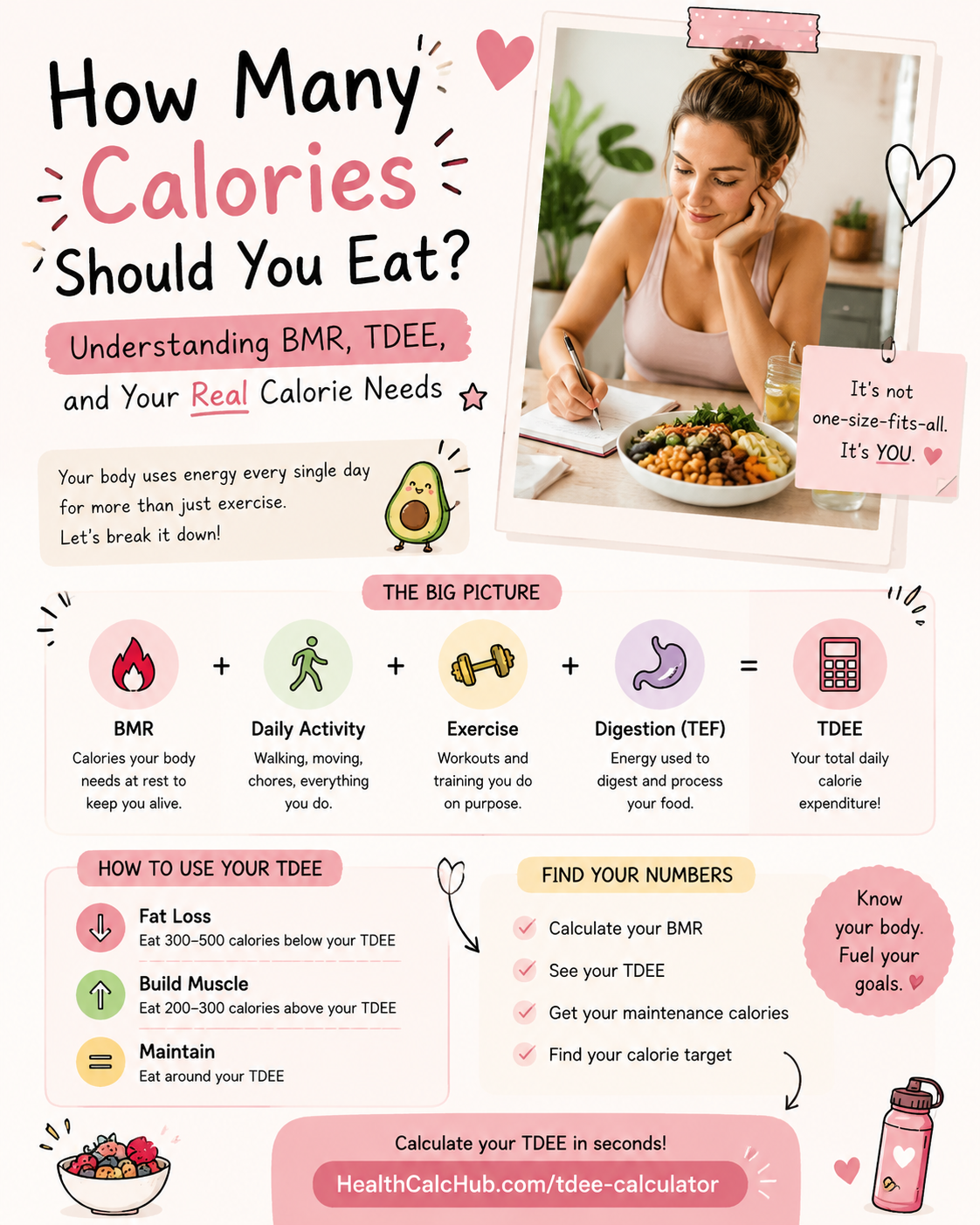
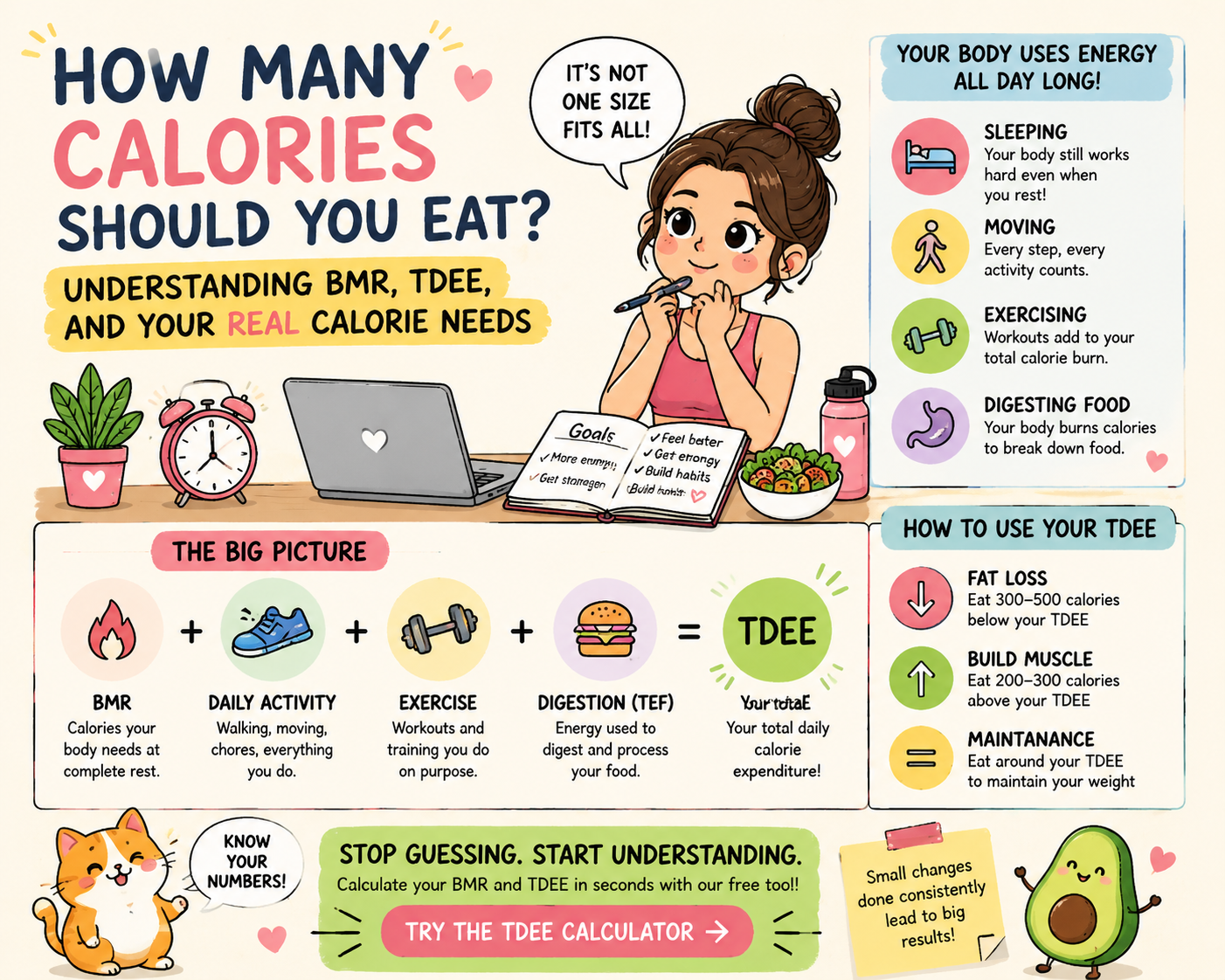
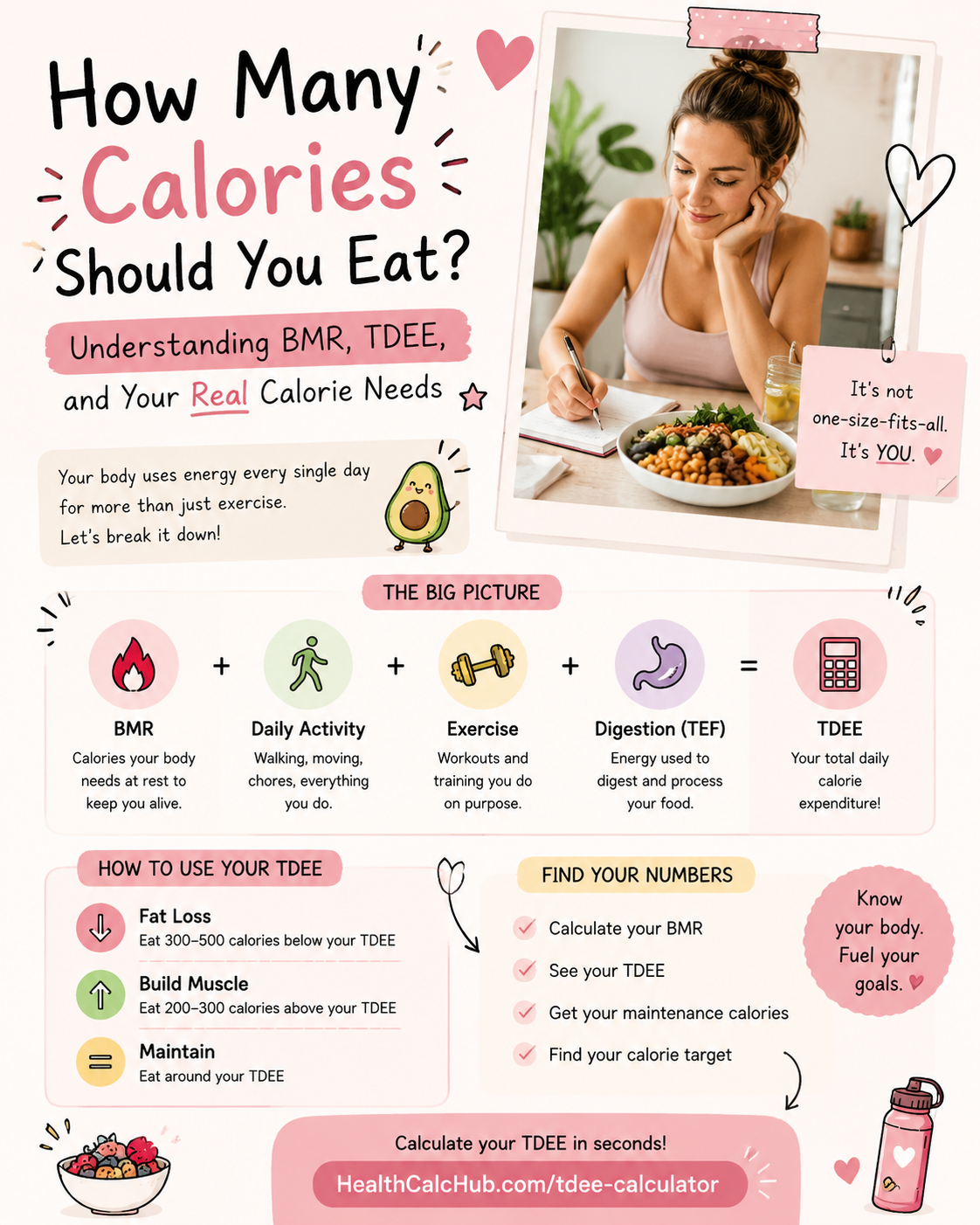
Your Basal Metabolic Rate (BMR) is the amount of energy your body needs just to keep basic functions running.
Think about everything happening inside your body every second:
Your heart is pumping blood
Your brain is using energy
Your body is maintaining temperature
Your cells are repairing and replacing themselves
BMR is your starting point.
But it does not represent the calories you burn in a normal day.
Your daily calorie needs are usually higher because your lifestyle adds movement and activity.
TDEE: The Number That Matches Your Real Lifestyle
Your Total Daily Energy Expenditure (TDEE) includes everything you do during the day.
It includes:
Your BMR
Walking around
Household activities
Exercise
Digesting food
This number explains why two people can have completely different calorie needs.
For example, someone who works at a desk all day and someone who walks 10,000 steps daily may need very different amounts of energy, even if they have similar body measurements.
Your TDEE gives you a more realistic starting point than following a random calorie number from someone else's diet plan.
Why I Stopped Chasing Random Calorie Numbers
One mistake many people make is choosing a calorie goal before understanding their own body.
A very low calorie target may look attractive because it promises faster results.
But the hardest part of weight loss is not starting.
It is finding something you can actually maintain.
The best calorie target is one that helps you make progress while still having enough energy for your life.
You should be able to:
Enjoy meals with friends
Complete your workouts
Focus at work
Build healthy habits
How TDEE Helps You Create a Better Plan
Once you know your estimated TDEE, you have a more realistic starting point.
If Your Goal Is Fat Loss
Many people begin with a moderate calorie deficit.
A common approach is eating around:
300–500 calories below your TDEE
This can help create steady progress without relying on extreme restriction.
If Your Goal Is Building Muscle
Your body needs enough fuel to support training and recovery.
A small calorie surplus combined with resistance training and enough protein can support muscle growth.
If Your Goal Is Maintaining Your Weight
Your TDEE gives you an estimate of how much energy your body may need to maintain your current weight.
Find Your Personal Calorie Needs
Everyone's calorie needs are different.
Instead of copying someone else's diet plan, start by understanding your own baseline.
✓ Your BMR ✓ Your daily calorie needs ✓ Your maintenance calories ✓ Your calorie targets for different goals
Knowing these numbers gives you a better starting point than guessing.
Calculate your TDEE on HealthCalcHub →
The Bottom Line
I used to think successful weight loss was about having more discipline.
Now I see it differently.
Understanding your body's energy needs makes the process much easier. When you know your BMR and TDEE, you can make better choices without constantly guessing.
Your body is not the same as anyone else's.
Your calorie plan shouldn't be either.
Frequently Asked Questions
What is the difference between BMR and TDEE?
BMR is the amount of energy your body uses at complete rest. TDEE includes your BMR plus all daily movement, exercise, and digestion.
Can I lose weight without knowing my TDEE?
Yes, but knowing your estimated TDEE can help you choose a more realistic calorie target and better understand your progress.
Why do calorie calculators give different results?
Different calculators may use different formulas and assumptions. Results are estimates, but they provide a useful starting point for planning.
Medical Disclaimer
HealthCalcHub provides educational content and calorie estimates for general informational purposes only. Calculator results are estimates and should not replace professional medical advice.